
Category: Uncategorized

  • Pakistan’s Field Marshal Asim Munir Set for Supremacy: 27th Amendment to Cement His Power

    Pakistan’s Field Marshal Asim Munir Set for Supremacy: 27th Amendment to Cement His Power

    Constitutional overhaul to elevate army chief as unified military-boss

    In a decisive move that may reshape Pakistan’s power architecture, the federal government is poised to table the Twenty‑seventh Amendment to the Constitution of Pakistan (27th Amendment). This constitutional revision is widely seen as aimed at strengthening the grip of Field Marshal Asim Munir by further centralizing military and executive authority.

    Among the key proposed changes: amendment of Article 243 to create a new “Commander of Defence Forces (CDF)” role, bringing Army, Navy and Air Force under a unified command. Also on the table: formation of a specialist Constitutional Court, reduction of provincial autonomy, and re-centralization of education and population-welfare ministries.

    Government officials argue the reform is necessary to streamline defence operations and strengthen Pakistan’s readiness following recent hostilities with India. Deputy Prime Minister Ishaq Dar said the amendment is being introduced “in accordance with law.”

    Critics, however, warn this could mark a major rollback of the 18th Amendment’s devolution of powers and exacerbate the country’s suspension of civilian governance. Opposition parties such as the Pakistan Tehreek‑e‑Insaf (PTI) and the Pakistan Peoples Party (PPP) have called the legislation a “power grab”.

    With Munir already holding the rare rank of Field Marshal (only the second in Pakistan’s history), passage of the 27th Amendment would carve his position more firmly into the constitutional framework—and escalate concerns over governance, accountability and the future of democracy in Pakistan.

  • Israel Offered to Help India Strike Pakistan’s Nuclear Site — Why Indira Gandhi Refused the Plan

    Israel Offered to Help India Strike Pakistan’s Nuclear Site — Why Indira Gandhi Refused the Plan

    Ex-CIA Officer Reveals Secret India-Israel Plan to Target Pakistan’s Kahuta Nuclear Facility

    In a startling revelation, former CIA counter-proliferation officer Richard Barlow has disclosed that Israel once offered to help India carry out a joint airstrike on Pakistan’s nuclear enrichment facility at Kahuta in the early 1980s. The plan, aimed at halting Islamabad’s march toward developing nuclear weapons, was discussed at a time when global intelligence agencies were closely monitoring Pakistan’s atomic ambitions.

    According to Barlow, Israel proposed to send its fighter jets to India, from where the strike on Kahuta could be launched with logistical and radar support from the Indian Air Force. The Israeli offer came after reports suggested that Pakistan was on the verge of producing weapons-grade uranium, sparking fears of an “Islamic bomb.”

    However, then-Prime Minister Indira Gandhi ultimately rejected the proposal. She was reportedly concerned that such an operation could trigger a full-scale war with Pakistan, invite severe international backlash, and draw condemnation from the United States, which at the time was supporting Pakistan during the Soviet-Afghan conflict.

    Barlow described the aborted plan as a “missed opportunity,” claiming that it could have changed South Asia’s strategic balance. “It’s a shame Indira Gandhi didn’t approve it,” he said, noting that the move could have “solved a lot of problems.”

    Experts, however, believe that Gandhi’s caution prevented possible escalation into a nuclear confrontation in the region. The episode remains one of the most secretive and debated moments in India’s modern strategic history — a reminder of how close South Asia once came to a major military flashpoint.

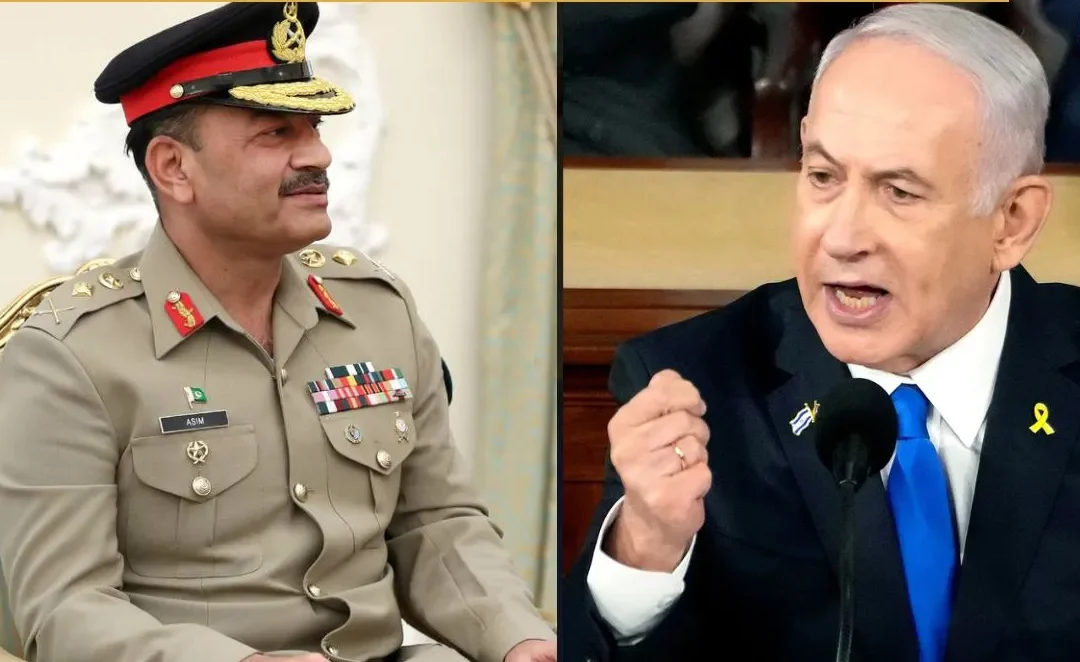
  • Rumor Sparks Uproar: Reports of“Pakistan Soldiers in Gaza”Proven Fake

    Rumor Sparks Uproar: Reports of“Pakistan Soldiers in Gaza”Proven Fake

    “The Cost of One Pakistani Soldier…”

    Amid the ongoing Israel-Hamas conflict, a sensational report has gone viral on social media claiming that Israel had made a deal with Pakistan to deploy its soldiers in Gaza to eliminate Hamas. The story, which mentioned “the cost of one Pakistani soldier,” has been found to be completely fabricated and has been officially denied by both countries.

    According to the viral post, a Pakistani journalist alleged that Army Chief General Asim Munir demanded USD 10,000 per soldier for deployment in Gaza, while Israel allegedly offered only USD 100 per soldier. The rumor quickly spread across social media and some unverified websites, sparking outrage and confusion.

    However, Pakistan’s Ministry of Foreign Affairs and Defence Ministry promptly dismissed the report, clarifying that no such deal or deployment plan exists. Israeli authorities have also denied any communication or agreement involving Pakistani troops.

    Experts have pointed out that such claims are typical of wartime misinformation and propaganda, designed to create political tension and mislead the public. The episode highlights how fake news spreads rapidly in conflict situations, especially when emotions run high and reliable information is limited.

    Meanwhile, the war in Gaza continues, with the United Nations urging for increased humanitarian aid. Israel maintains that its operations are solely targeting Hamas strongholds, not civilians.

    The viral story serves as a reminder of the importance of verifying news sources before sharing, particularly during international crises where false narratives can fuel further instability.

  • Hello world!

    Welcome to WordPress. This is your first post. Edit or delete it, then start writing!

  • Hello world!

    Welcome to WordPress. This is your first post. Edit or delete it, then start writing!